Dan Cameron

(856) 904-9932

Retirement

Understanding the SECURE Act 2.0
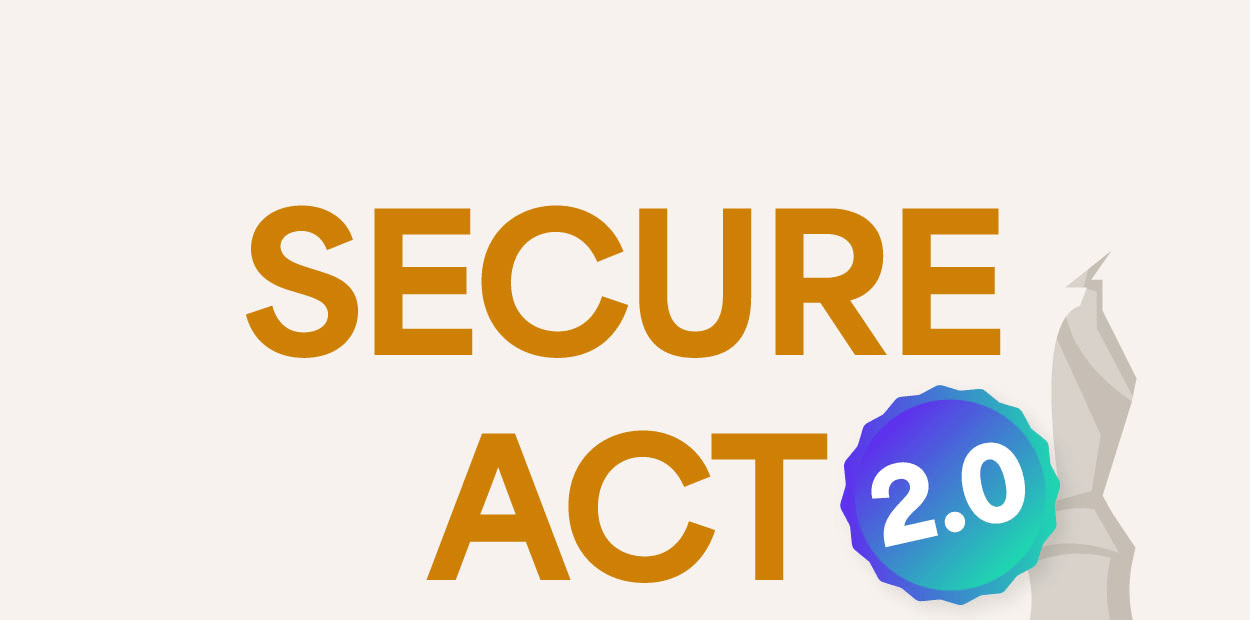
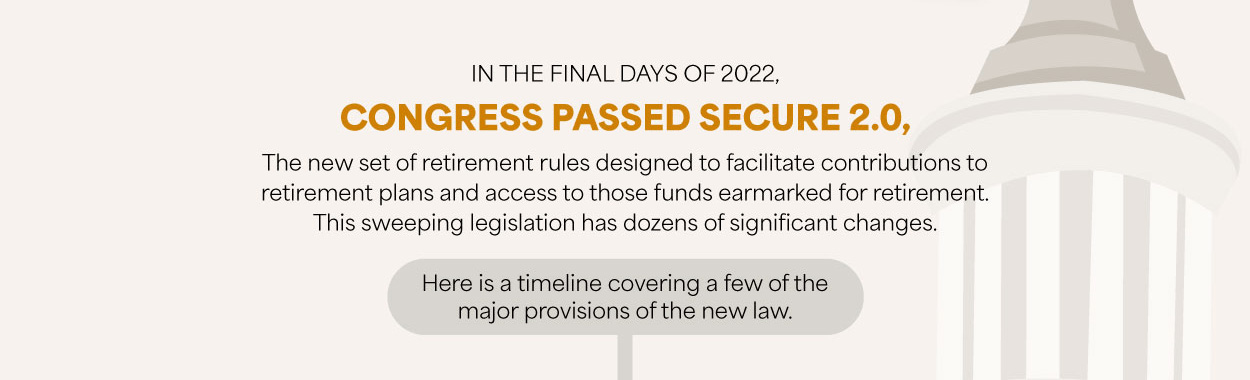
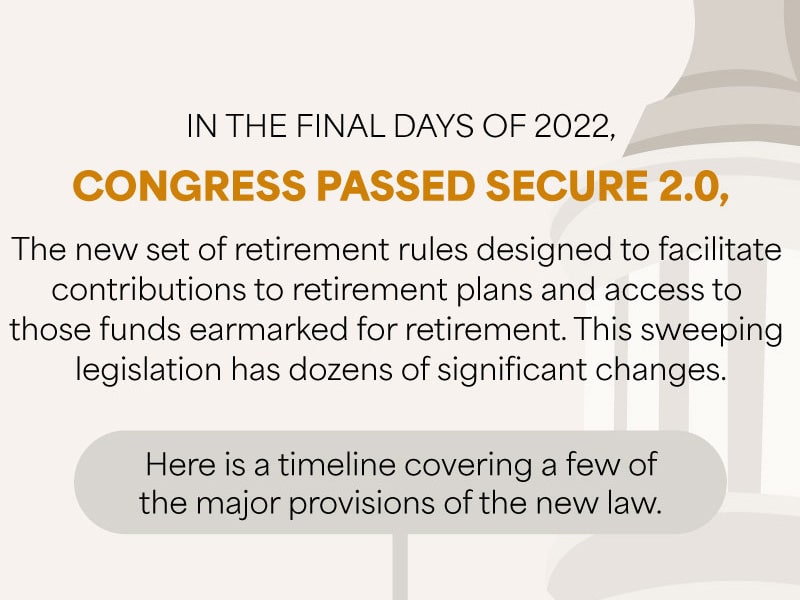
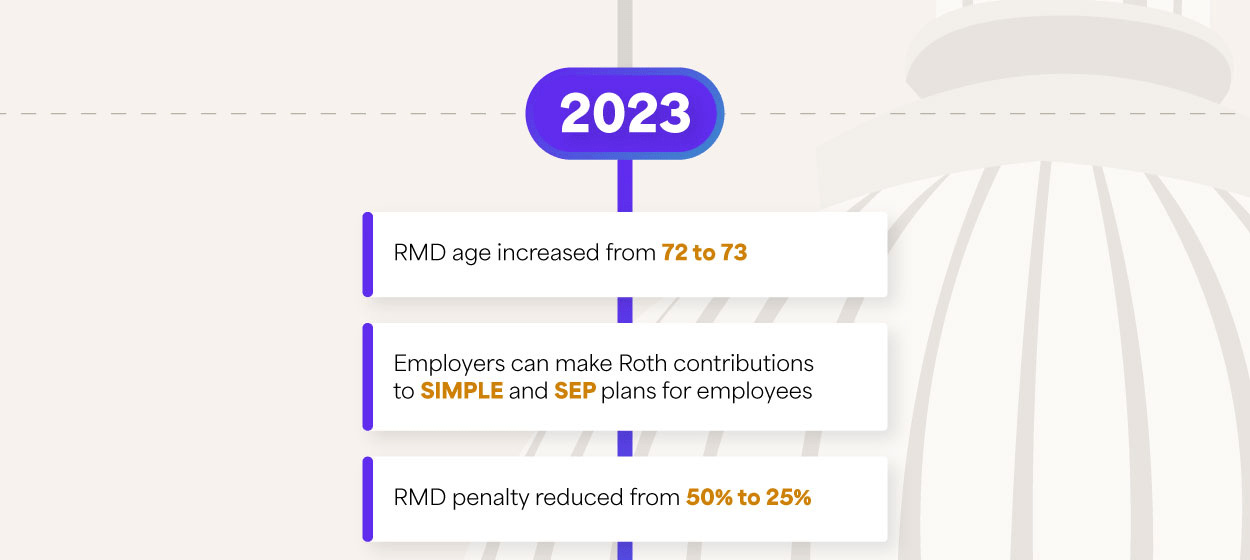
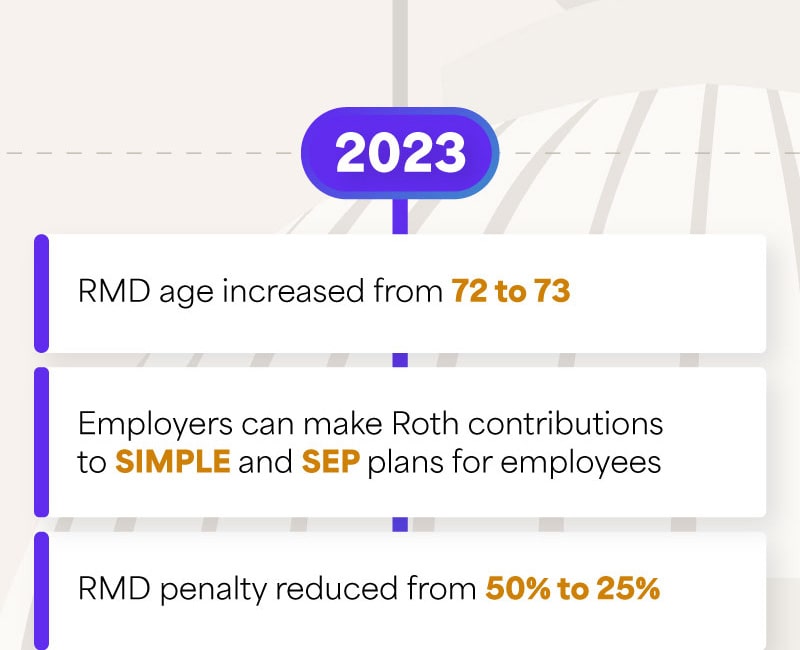
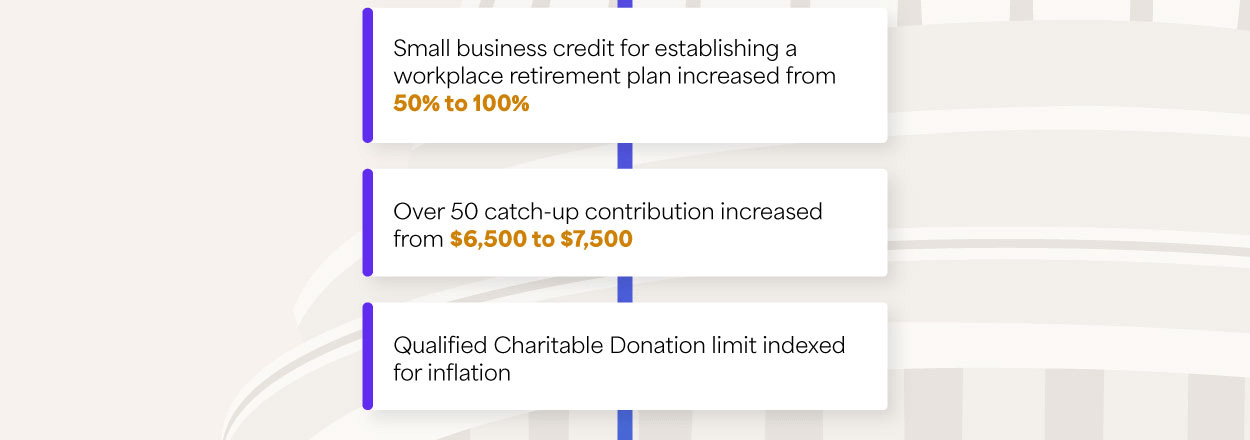
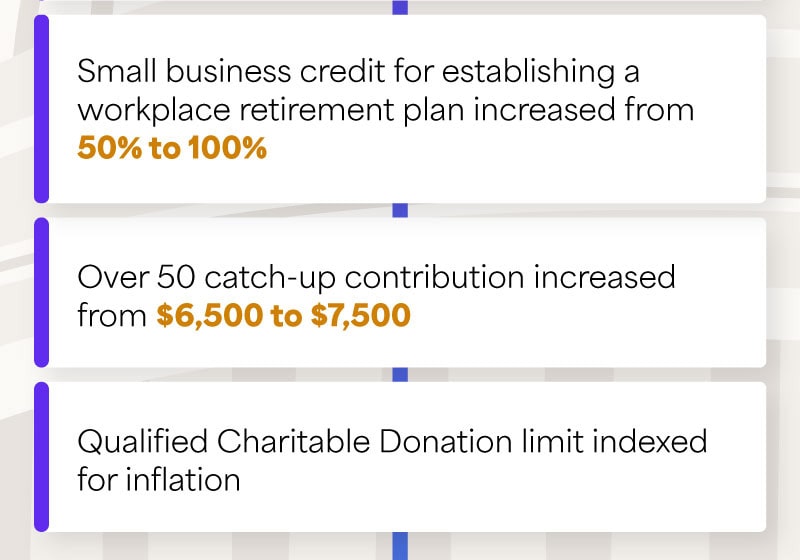
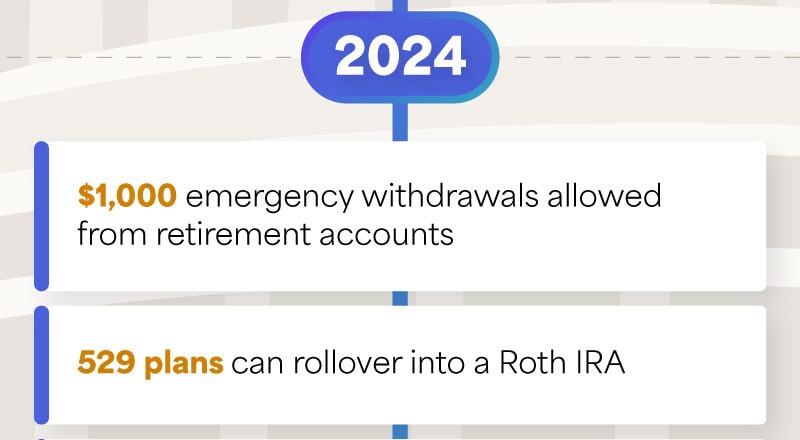
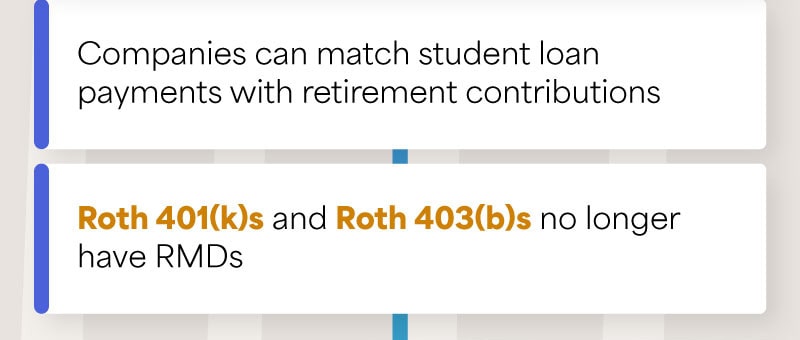
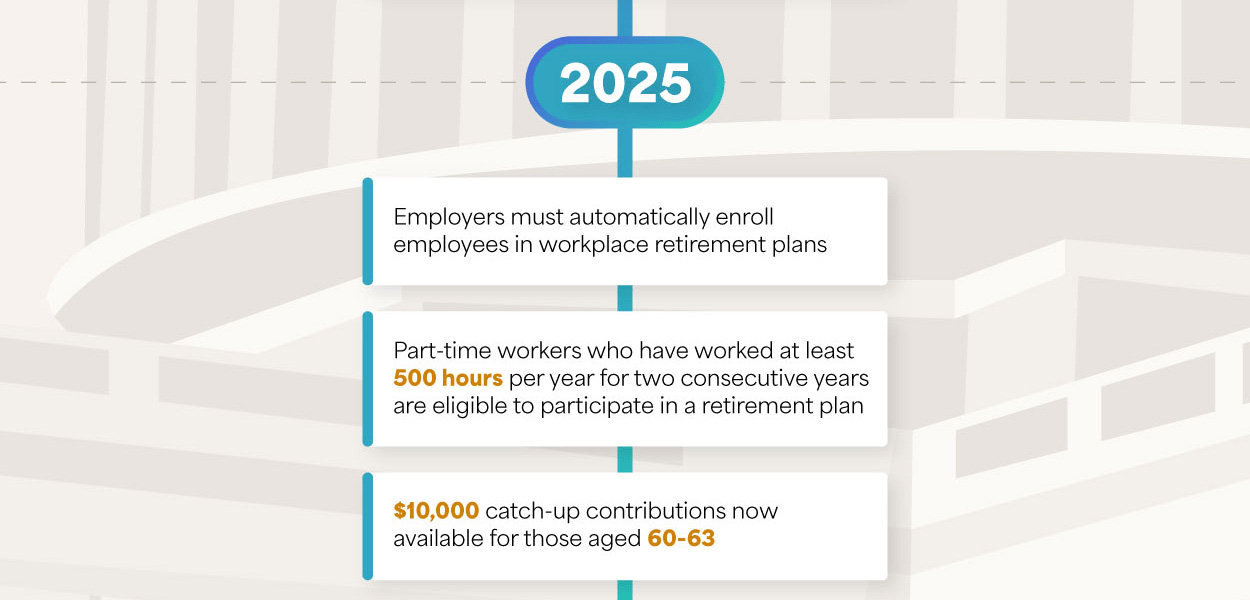
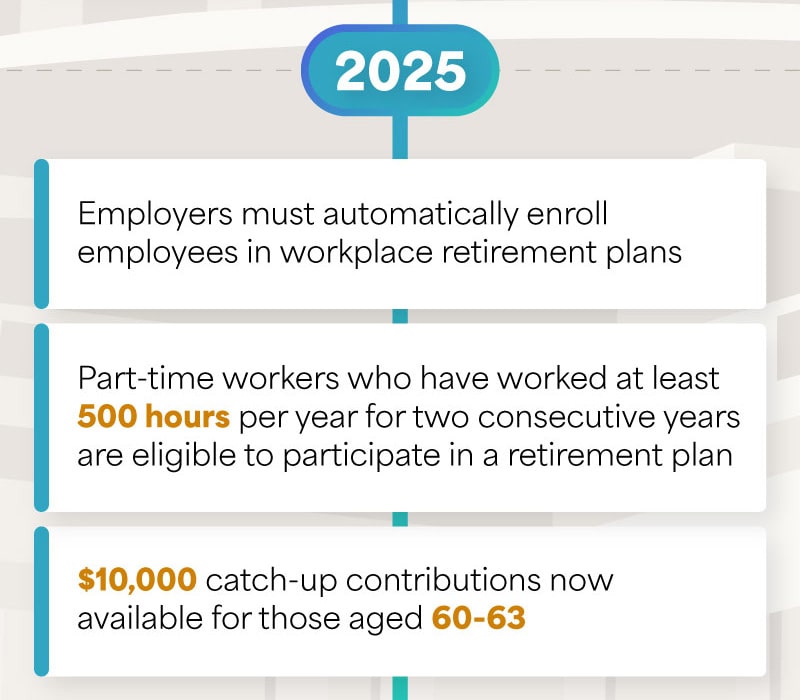
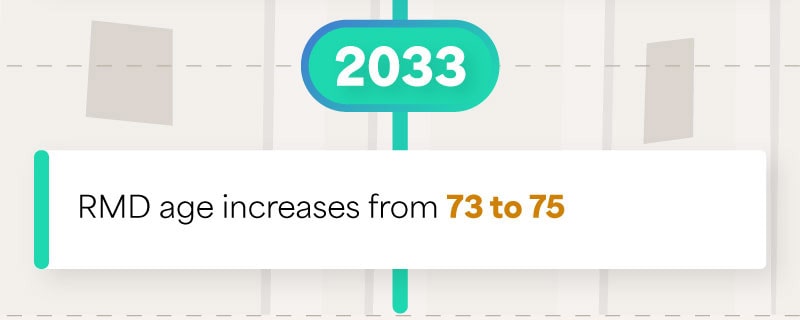
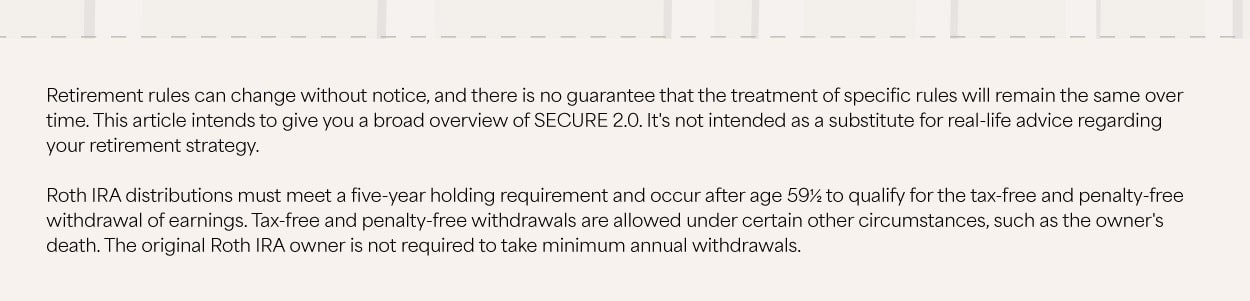
This infographic is composed of a timeline that moves vertically down the page starting in 2023 and ending in 2033. The title is placed next to a vector image of the US Capitol spire and reads: Secure Act 2.0.This infographic is composed of a timeline that moves vertically down the page starting in 2023 and ending in 2033. The title is placed next to a vector image of the US Capitol spire and reads: Secure Act 2.0.Moving down the US Capital spire, underneath the title is text that reads: In the final days of 2022, Congress passed SECURE 2.0, the new set of retirement rules designed to facilitate contribution to retirement plans and access to those funds earmarked for retirement. This sweeping legislation has dozens of significant changes; here is a timeline covering a few of the major changes of the new law.Moving down the US Capital spire, underneath the title is text that reads: In the final days of 2022, Congress passed SECURE 2.0, the new set of retirement rules designed to facilitate contribution to retirement plans and access to those funds earmarked for retirement. This sweeping legislation has dozens of significant changes; here is a timeline covering a few of the major changes of the new law.Moving down the US Capitol dome, the timeline begins with 2023 and lists six changes: RMD age increased from 72 to 73. Employers can make Roth contributions to SIMPLE and SEP plans for employees. RMD penalty reduced from 50 percent to 25 percent.Moving down the US Capitol dome, the timeline begins with 2023 and lists six changes: RMD age increased from 72 to 73. Employers can make Roth contributions to SIMPLE and SEP plans for employees. RMD penalty reduced from 50 percent to 25 percent.Small business credit for establishing a workplace retirement plan increased from 50 percent to 100 percent. Over 50 catch-up contribution increased from 6,500 dollars to 7,500 dollars. Qualified Charitable Donation limit indexed for inflation.Small business credit for establishing a workplace retirement plan increased from 50 percent to 100 percent. Over 50 catch-up contribution increased from 6,500 dollars to 7,500 dollars. Qualified Charitable Donation limit indexed for inflation.Continuing down the US Capitol dome, the timeline progresses to 2024 and lists four changes: 1,000 dollars emergency withdrawal from retirement accounts. 529 plans can rollover into a Roth IRA.Continuing down the US Capitol dome, the timeline progresses to 2024 and lists four changes: 1,000 dollars emergency withdrawal from retirement accounts. 529 plans can rollover into a Roth IRA.Companies can match student loan payments with retirement contributions. Roth 401(k)s and Roth 403(b)s no longer have RMDs.Companies can match student loan payments with retirement contributions. Roth 401(k)s and Roth 403(b)s no longer have RMDs.Closer to the base of the US Capitol dome, the timeline transitions to 2025: Employers must automatically enroll employees in workplace retirement plans. Part-time workers who have worked at least 500 hours per year for two consecutive years are eligible to participate in a retirement plan. 10,000 dollar catch-up contributions now available for those aged 60-63.Closer to the base of the US Capitol dome, the timeline transitions to 2025: Employers must automatically enroll employees in workplace retirement plans. Part-time workers who have worked at least 500 hours per year for two consecutive years are eligible to participate in a retirement plan. 10,000 dollar catch-up contributions now available for those aged 60-63.At the base of the US Capitol dome, the timeline reaches 2033 with one final change: RMD age increases from 73 to 75.At the base of the US Capitol dome, the timeline reaches 2033 with one final change: RMD age increases from 73 to 75.The bottom of the infographic depicts part of the US Capitol dome, largely obstructed by text that reads: Retirement rules can change without notice, and there is no guarantee that the treatment of specific rules will remain the same over time. This article intends to give you a broad overview of SECURE 2.0. It's not intended as a substitute for real-life advice regarding your retirement strategy. Roth IRA distributions must meet a five-year holding requirement and occur after age 59½ to qualify for the tax-free and penalty-free withdrawal of earnings. Tax-free and penalty-free withdrawals are allowed under certain other circumstances, such as the owner's death. The original Roth IRA owner is not required to take minimum annual withdrawals.The bottom of the infographic depicts part of the US Capitol dome, largely obstructed by text that reads: Retirement rules can change without notice, and there is no guarantee that the treatment of specific rules will remain the same over time. This article intends to give you a broad overview of SECURE 2.0. It's not intended as a substitute for real-life advice regarding your retirement strategy. Roth IRA distributions must meet a five-year holding requirement and occur after age 59½ to qualify for the tax-free and penalty-free withdrawal of earnings. Tax-free and penalty-free withdrawals are allowed under certain other circumstances, such as the owner's death. The original Roth IRA owner is not required to take minimum annual withdrawals.
 

Related Content

The Financial Literacy Crisis

The Financial Literacy Crisis

Many Americans are operating their personal finances with only the barest minimum of knowledge.

Where Will Your Retirement Money Come From?

Where Will Your Retirement Money Come From?

Retirement income may come from a variety of sources. Here's an overview of the six main sources.

An Arm and a Leg

An Arm and a Leg

A visit to the hospital can be painful, for both your body and your wallet. Don't let it be more painful than it has to be.


Have A Question About This Topic?


Thank you! Oops!

How the SECURE Act 2.0 Changed RMDs

Understand how SECURE Act 2.0 affects RMDs and how using a QCD can possibly benefit both taxes and charitable goals.

The Utility of Sector Investing

Successful sector investing is dependent upon an accurate analysis about when to rotate in and out.

How Often Should You Update Your Estate Strategy?

Review your legacy approach regularly, particularly following significant life events or legislative updates.

View all articles

How Compound Interest Works

Explore how compound interest can grow your money over time with this interactive tool.

Emergency Fund Calculator

Find out how large your emergency fund should be based on your monthly expenses.

Monthly Budget

Track your monthly income and expenses to get a clearer view of your cash flow.

View all calculators

It Was the Best of Times, It Was the Worst of Times

All about how missing the best market days (or the worst!) might affect your portfolio.

When Markets React

When markets shift, experienced investors stick to their strategy.

Stay Safe with a Business Owner's Policy

Learn the advantages of Business Owner's Policies with this highly educational and fun animated video.

View all videos